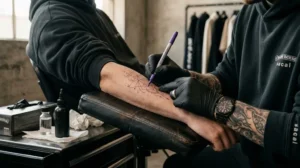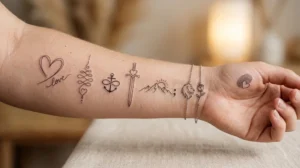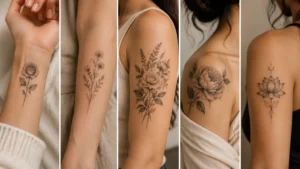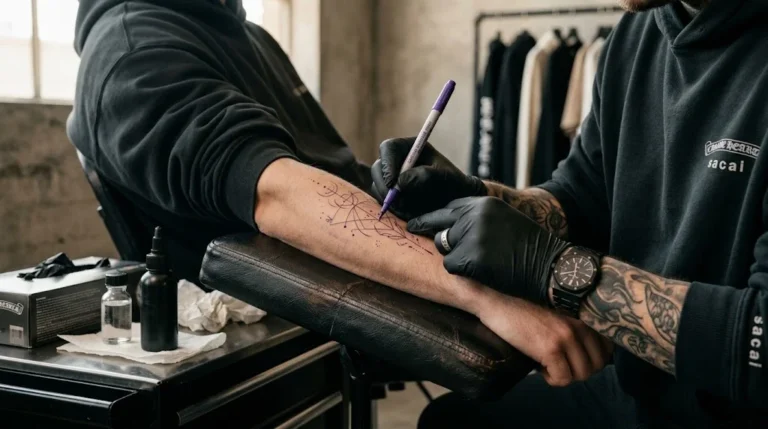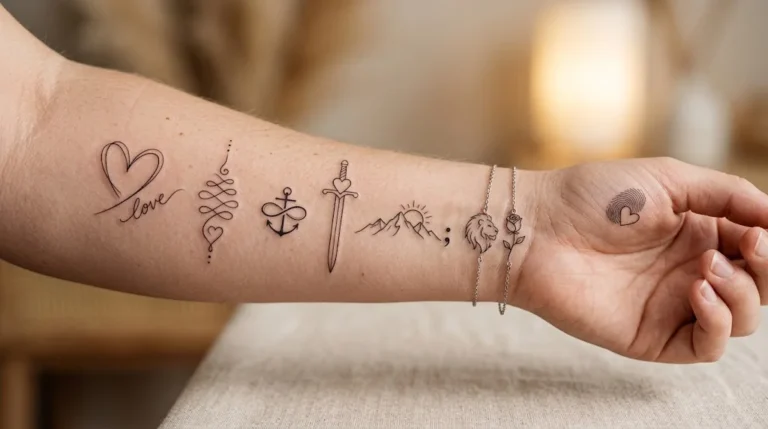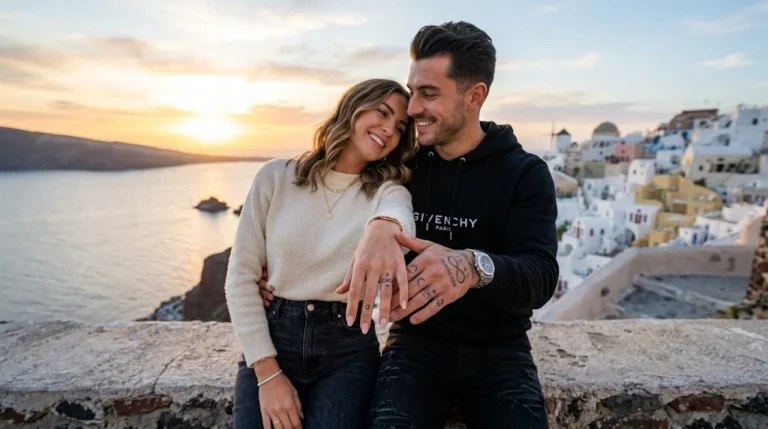
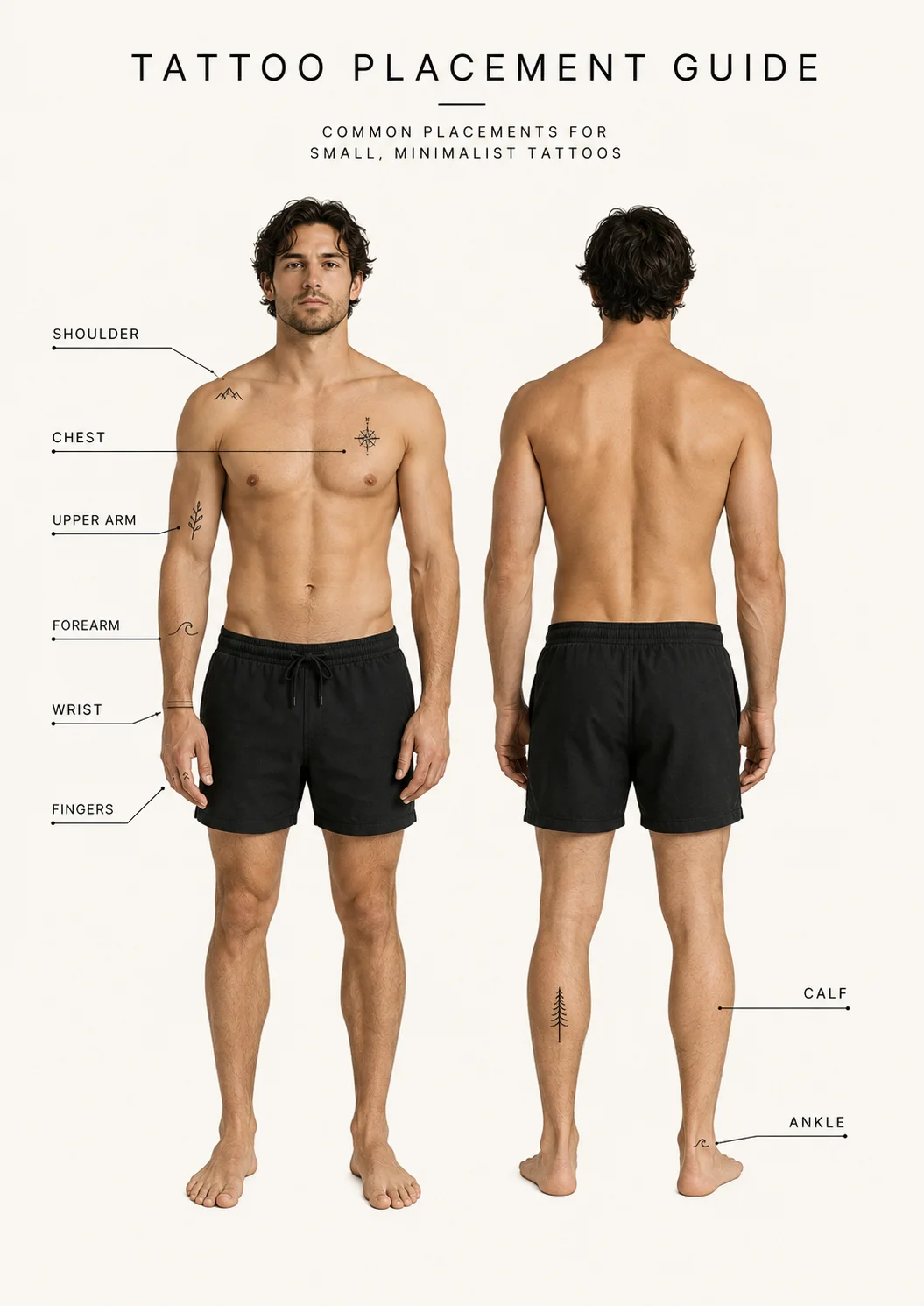
The best spots for tattoos guys choose for minimal designs include the upper arm, forearm, wrist, shoulder, chest, calf, ankle, and fingers. Your best placement depends on how visible you want the tattoo, how much space the design needs, and how easily you want to cover it. For tiny details, placement matters as much as the artwork itself.
Quick Facts
- Best all-round placement: Outer upper arm
- Best for visible minimal tattoos: Forearm
- Best for meaningful daily reminders: Wrist
- Best for very small designs: Fingers
- Best for easy concealment: Upper arm or chest
- Best for future expansion: Shoulder, upper arm, or forearm
- Best first step: Choose the placement before finalizing tiny design details
- Biggest fading factor you can control: Sun exposure. The American Academy of Dermatology states that UV light can fade some tattoo inks.
How to Choose the Right Tattoo Placement
A good tattoo should fit your body as well as your style.
Before you pick a location, think about five things.
Decide how visible you want it
A forearm or wrist tattoo stays in view throughout much of the day. An upper arm or chest tattoo gives you more control.
Think beyond the first few weeks. Ask yourself if you will still want strangers, coworkers, clients, or family members to see it regularly.
Workplace expectations vary between employers, industries, and countries, so check any rules that apply to you.
Match the design to the available space
Small does not always mean detailed.
A tiny symbol may fit a finger perfectly. A detailed compass, animal, face, or landscape usually needs more room.
Give important lines enough breathing space. A design that looks clear on a phone screen may feel crowded when an artist reduces it to two centimeters.
Think about the body’s natural shape
The best tattoos follow the body’s lines.
Long designs often suit the forearm. Rounded designs can sit naturally on the shoulder. Small horizontal designs work well across the wrist or upper chest.
Your artist can adjust the size and angle before applying the stencil.
Consider daily exposure
Hands, wrists, forearms, and ankles often receive more sunlight than covered areas.
The American Academy of Dermatology recommends protecting tattooed skin from UV exposure because UV light can fade some tattoo inks. Once the tattoo has healed, follow appropriate sun protection guidance for your skin and location.
Leave room for future tattoos
Your first small tattoo may not stay your only tattoo.
If you think you might build a sleeve or larger composition later, avoid dropping a tiny design randomly into valuable space. Ask your artist how the placement could work with future pieces.
Best Spots for Tattoos Guys Choose for Minimal Designs
No single placement works for everyone. These areas give small designs different advantages.
| Placement | Visibility | Space for Detail | Easy to Cover? | Best For |
|---|---|---|---|---|
| Outer upper arm | Medium | Good | Yes | First tattoos, symbols, geometric art |
| Inner forearm | High | Good | Sometimes | Words, dates, line art |
| Outer forearm | High | Very good | Sometimes | Vertical symbols, clean illustrations |
| Wrist | High | Limited | Sometimes | Small symbols, dates, short words |
| Fingers | Very high | Very limited | No | Tiny marks, initials, simple shapes |
| Shoulder | Low to medium | Good | Yes | Circular and geometric designs |
| Chest | Low | Very good | Yes | Personal or meaningful designs |
| Calf | Medium | Good | Usually | Vertical designs and symbols |
| Ankle | Medium | Limited | Usually | Small minimalist designs |
Outer Upper Arm
The outer upper arm offers one of the safest starting points for a small tattoo.
It gives the artist a relatively broad canvas, but a short sleeve can hide the design when needed. You can also expand the tattoo toward the shoulder or forearm later.
If you want one placement that balances privacy, design freedom, and future expansion, start here.
Inner Forearm
The inner forearm works well for tattoos that you want to see yourself.
It suits narrow designs, short text, dates, coordinates, botanical lines, and personal symbols. The flatter surface also gives an artist more room than a wrist or finger.
Keep text large enough to remain readable.
Outer Forearm
The outer forearm makes simple artwork easy to notice.
It works especially well for vertical compositions such as arrows, swords, branches, geometric forms, animals, or abstract line work.
This area also leaves room for future additions.
The main tradeoff involves visibility. Short sleeves will not always hide it.
Wrist
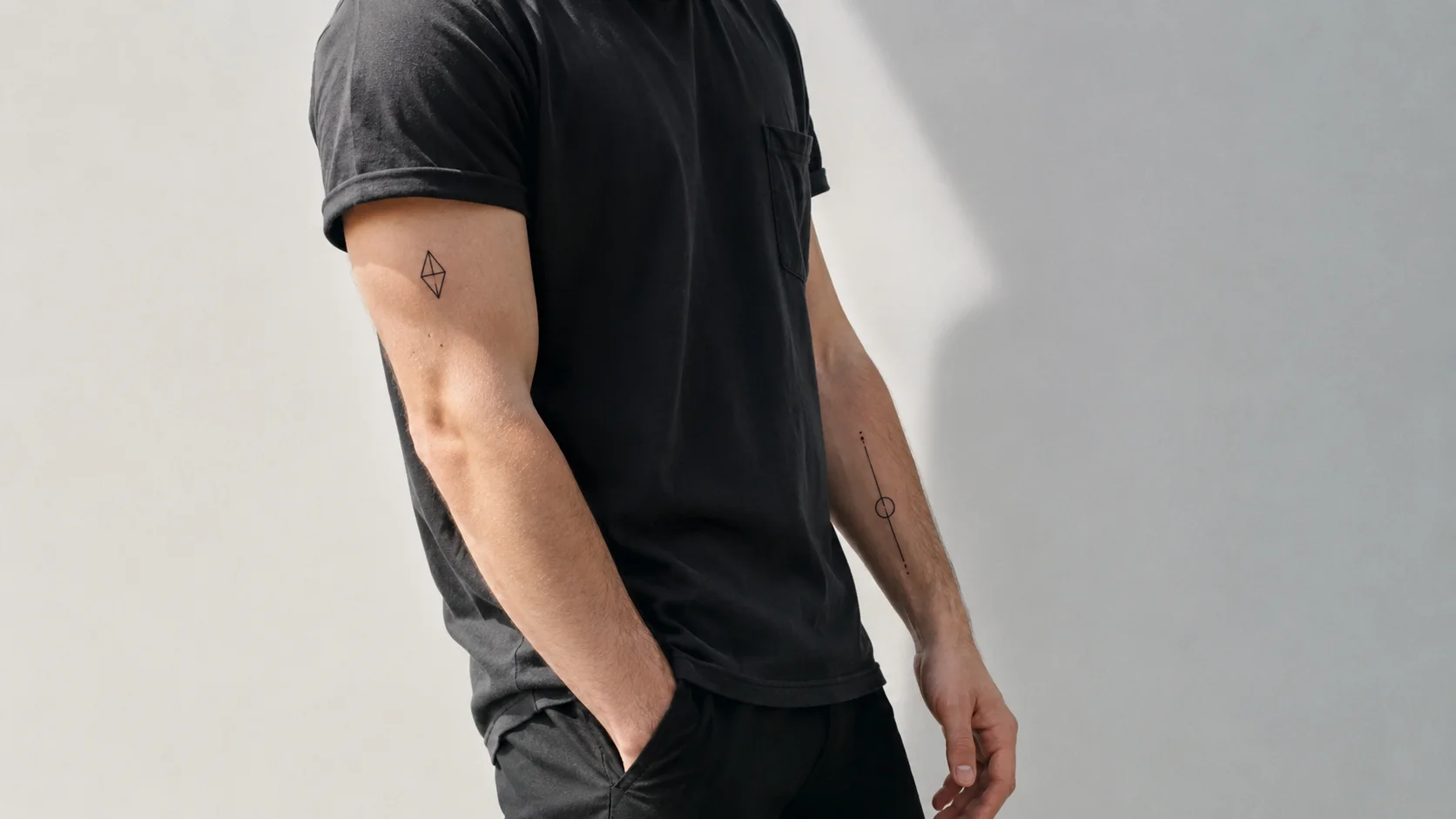
The wrist suits small tattoos with personal meaning.
A date, symbol, tiny shape, coordinate, or short word can fit naturally without taking over the arm.
Placement makes a major difference here. An inner wrist tattoo feels more personal, while an outer or side wrist design often looks more graphic.
We cover wrist tattoo placement in detail below.
Fingers
Finger tattoos make a strong visual statement despite their small size.
They suit extremely simple designs because each finger offers little usable space. Small symbols, letters, numbers, dots, bands, and tiny geometric forms usually fit better than complex illustrations.
Finger placement also stays highly visible. Consider that before choosing it for your first tattoo.
Shoulder
The shoulder gives minimalist artwork room without making it constantly visible.
Circular designs, small animals, symbols, sun motifs, geometric forms, and line illustrations can follow the shoulder’s shape.
You can also connect a shoulder tattoo to a larger upper-arm piece later.
Chest
The chest works well for personal designs that you do not want everyone to see.
You gain more room for detail than you get on a wrist or finger. The location also lets you place a design close to the center of the body or over one side of the chest.
Names, dates, coordinates, symbols, line drawings, and memorial designs commonly fit this area.
Calf
The calf gives vertical designs plenty of room.
It suits small to medium symbols, botanical artwork, animals, abstract designs, or geometric pieces.
Long trousers hide the tattoo easily in many settings.
Ankle
The ankle works for tiny, understated designs.
Small symbols, numbers, outlines, coordinates, minimalist animals, or narrow geometric marks can fit well.
Shoes, socks, and clothing may contact the area during healing, so discuss practical aftercare with your artist before booking.
Best Spots for Tattoos Guys Can Hide Easily
If privacy matters, focus on:
- Upper arm
- Chest
- Shoulder
- Upper thigh
- Calf
The upper arm offers the best balance for many beginners. You can reveal it casually with shorter sleeves or hide it with ordinary clothing.
Finger and hand tattoos sit at the opposite end of the scale. You cannot reliably hide them without covering the area.

Small Tattoo Ideas for Men by Placement
People searching for small tattoos ideas for men often focus on the design first. Placement should come first.
A simple idea can look completely different depending on where you put it.
Upper Arm Ideas
Try:
- Mountain outline
- Compass
- Single animal silhouette
- Small geometric pattern
- Initials
- Meaningful date
- Coordinate line
- Minimalist wave
Forearm Ideas
Good choices include:
- Vertical symbol
- Short phrase
- Roman numerals
- Branch or leaf
- Small sword
- Abstract line
- Constellation-inspired pattern
- Personal coordinates
Wrist Ideas
Consider:
- A date
- One short word
- Initials
- Tiny geometric symbol
- Simple line
- Small star
- Personal number
- Coordinate pair
Finger Ideas
Keep finger artwork simple:
- Single letter
- Small number
- Tiny cross
- Geometric line
- Dot pattern
- Miniature symbol
- Simple band
- Small icon
Chest Ideas
The chest can handle slightly more detail:
- Family initials
- Coordinates
- Minimalist animal
- Small religious symbol
- Short phrase
- Geometric design
- Memorial date
- Line drawing
If you want to design small tattoo ideas for men, sketch the concept at roughly the size you plan to wear it. Then ask an experienced tattoo artist if that amount of detail suits the chosen placement.
Cool Simple Tattoos for Guys That Do Not Need Much Space
The strongest cool simple tattoos for guys often rely on one recognizable idea rather than many tiny elements.
Examples include:
- mountain outlines
- waves
- arrows
- stars
- geometric shapes
- initials
- dates
- coordinates
- minimalist animals
- simple botanical lines
- abstract symbols
- small celestial designs
The same principle applies to mens simple tattoo ideas in almost every style: simplify the concept before shrinking the artwork.
If the idea stops making sense after you remove half the detail, choose a larger placement instead of forcing it onto a finger or wrist.
Wrist Tattoo Placement Guide
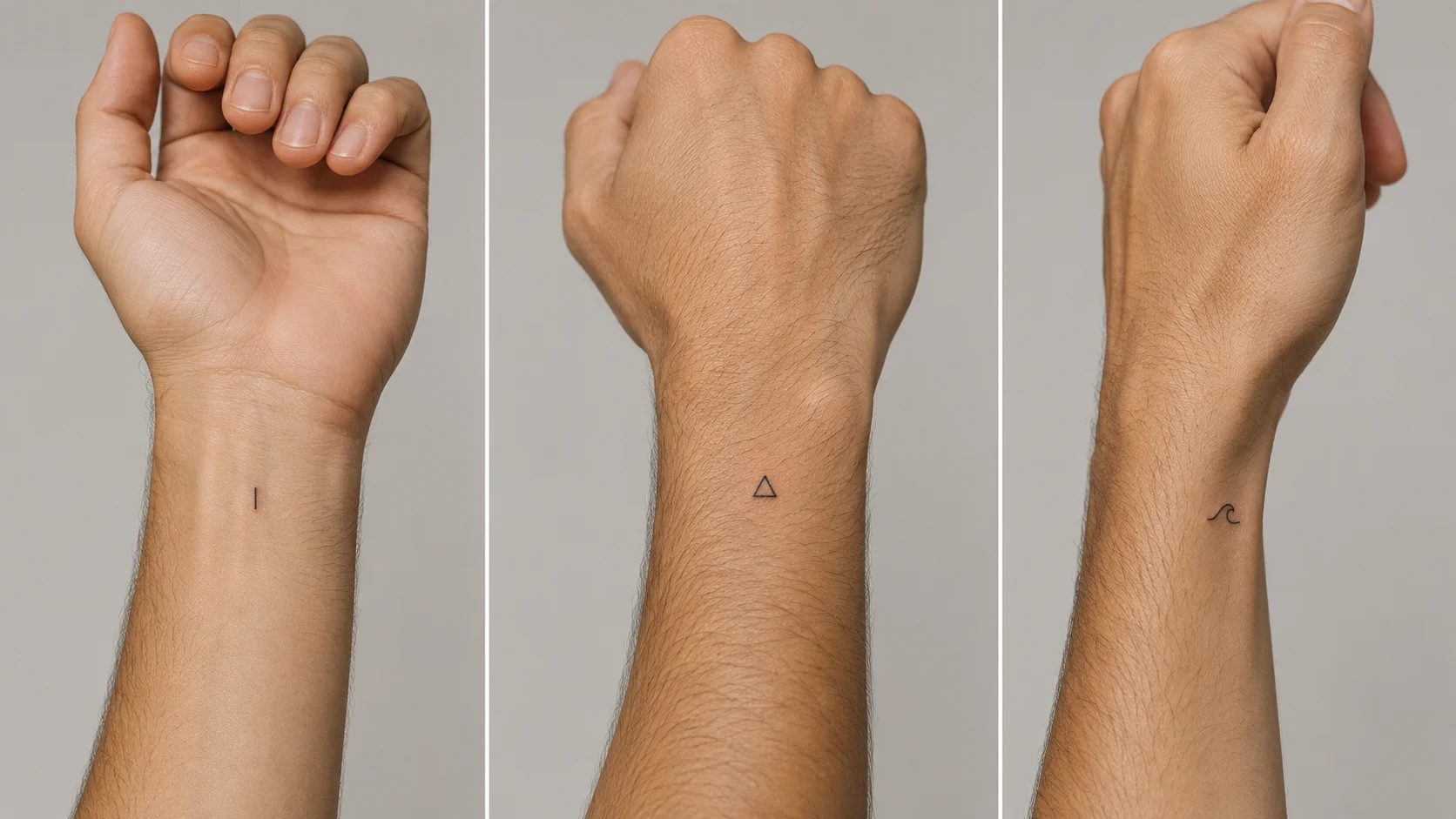
The wrist gives you three main placement choices.
Inner Wrist
The inner wrist feels personal because you can see it easily.
It works well for:
Designs that run parallel with the forearm can create a clean, balanced look.
Outer Wrist
The outer wrist creates a more visible, graphic effect.
Small geometric pieces, symbols, tiny illustrations, and simple shapes fit naturally here.
Consider how the design will look beside a watch or bracelet if you wear one regularly.
Side Wrist
The side wrist provides a narrow strip for understated artwork.
It suits short words, numbers, dates, thin symbols, or very simple lines.
Avoid forcing complex artwork into this small space.
Meaningful Wrist Tattoos for Men
Meaningful wrist tattoos for men work best when the design represents something the wearer actually values.
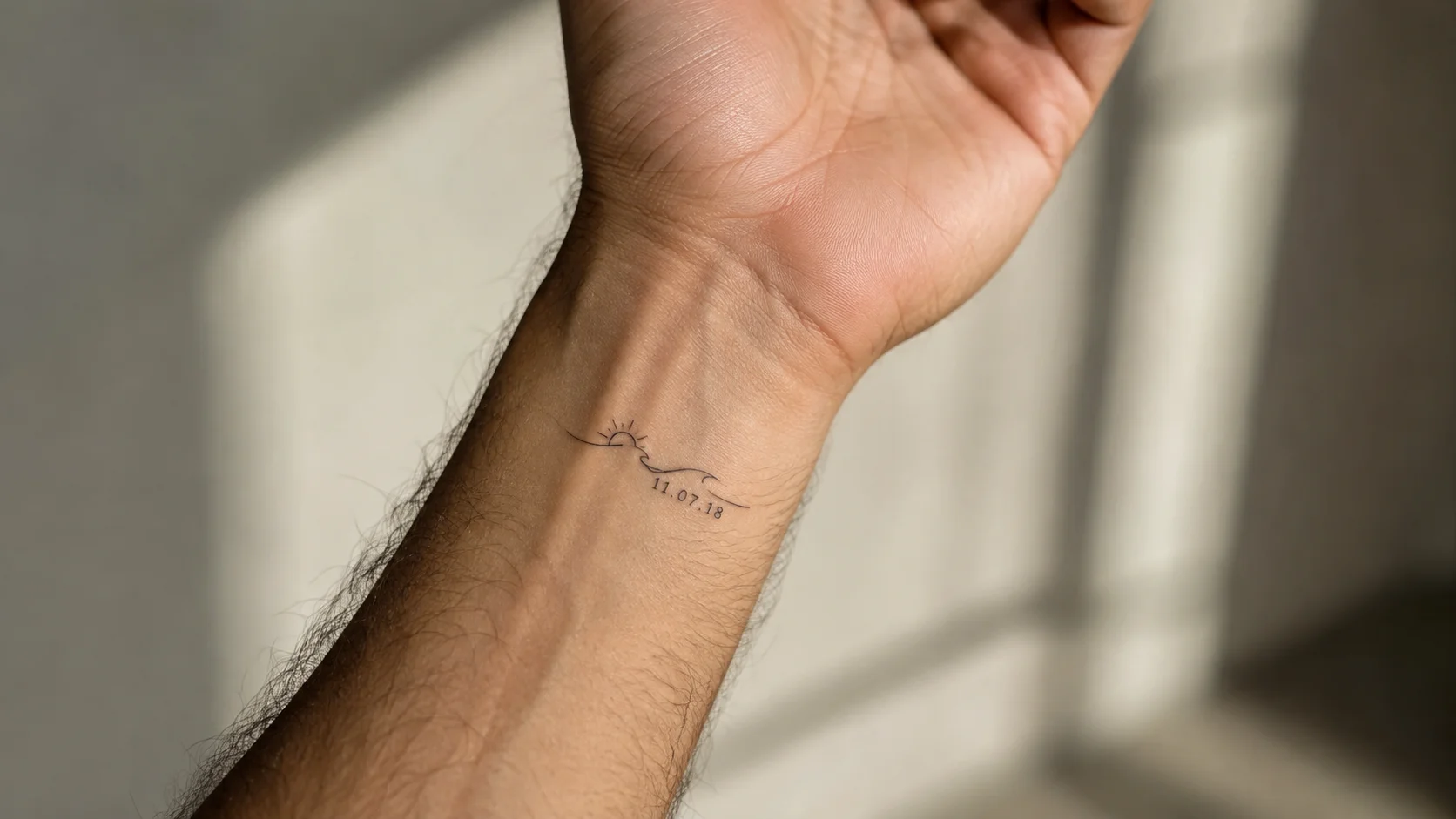
The wrist stays easy to see, which can make it useful for a personal reminder.
Ideas include:
- a family member’s initials
- an important date
- coordinates of a meaningful place
- a symbol connected to a personal belief
- one word with personal significance
- a simple memorial mark
- a number with private meaning
People searching for a wrist meaning tattoo for men often expect one symbol to carry a universal message. Tattoo meanings rarely work that neatly.
The same arrow, number, animal, or geometric symbol can mean completely different things to different people.
Research symbols before using them, especially religious, cultural, military, gang-related, or historical imagery. Context matters.
Tattoos on Wrist Meaning: Does Placement Change the Message?
People often search tattoos on wrist meaning because they wonder if the location itself carries a fixed meaning.
Usually, it does not.
The wrist mainly changes how you interact with the tattoo. You see it often, other people notice it easily, and small personal symbols fit the area well.
The actual meaning comes from the design and the reason you chose it.
Small Finger Tattoos for Men
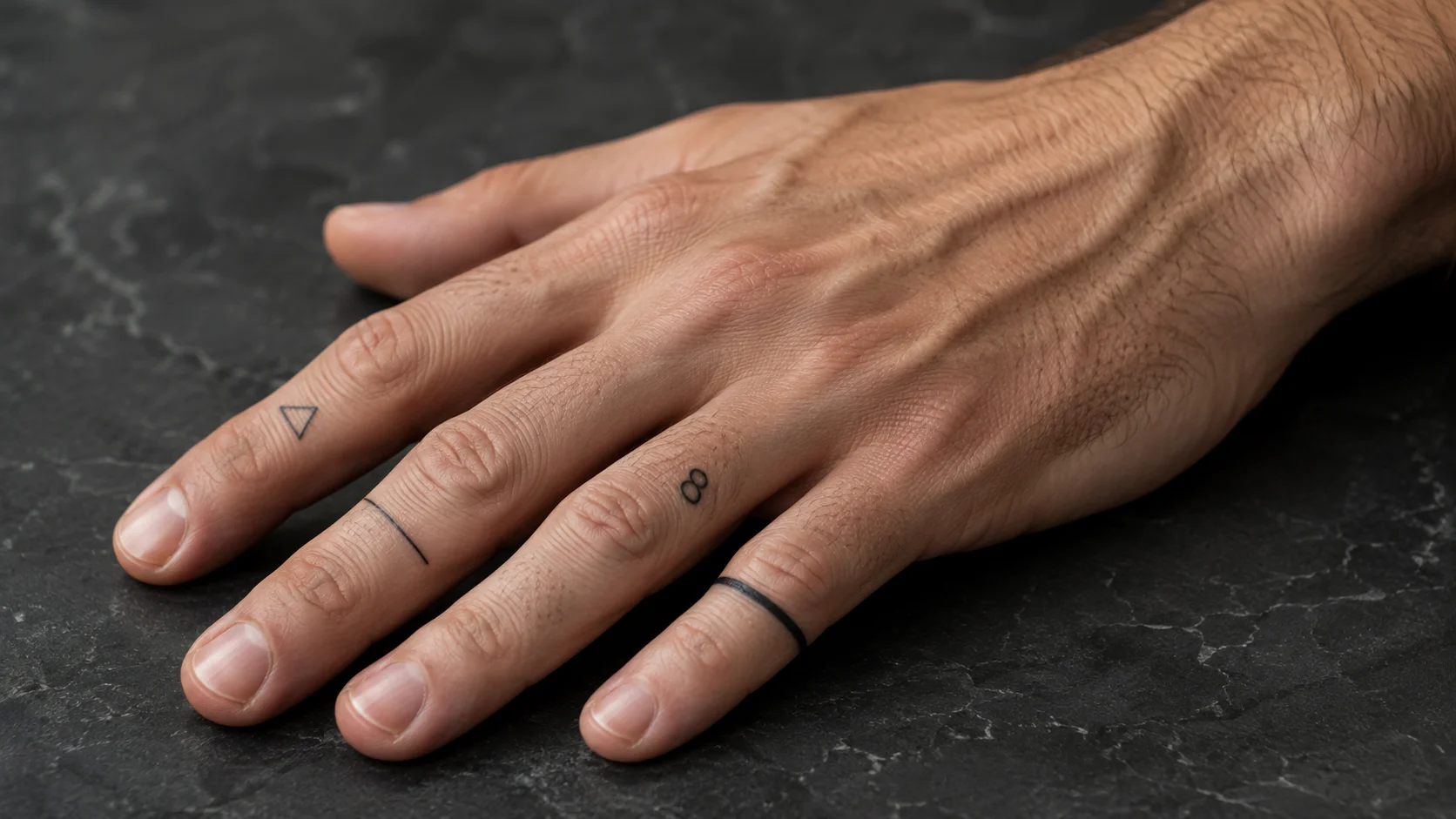
Small finger tattoos for men suit people who want tiny artwork with high visibility.
Finger space creates strict limits, so simplicity helps.
The strongest ideas usually rely on a shape that remains recognizable without fine internal detail.
Finger Tattoo Designs for Men
Practical finger tattoo designs for men include:
- single letters
- numbers
- tiny geometric shapes
- short line symbols
- simple bands
- stars
- small crosses
- minimal icons
Complex faces, paragraphs of text, detailed animals, and intricate landscapes rarely match the limited canvas well.
Best Finger Tattoos for Men
The best finger tattoos for men usually share three qualities:
- The design uses a simple silhouette.
- The artwork does not depend on tiny details.
- The wearer feels comfortable displaying it every day.
Ask your artist to show you the design at its actual tattoo size rather than judging it from a large digital image.
Do Wrist Tattoos Fade?
Yes, wrist tattoos can fade over time. They do not automatically fade faster than every other tattoo, but wrists often receive regular sun exposure. The American Academy of Dermatology states that UV light can fade some tattoo inks and recommends sun protection for tattooed skin.
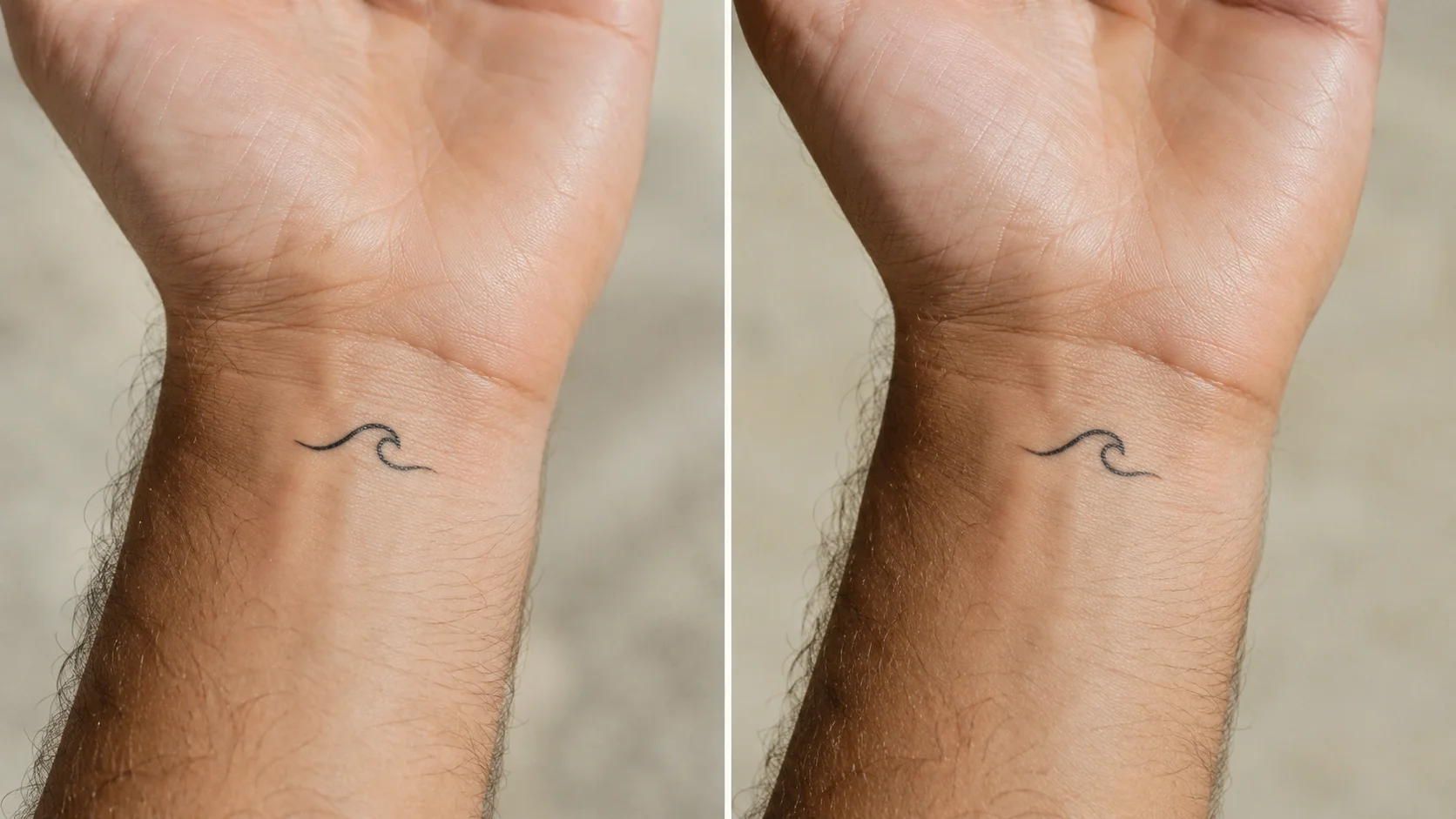
Other factors can affect how a tattoo looks as it ages, including the original design, ink, healing, skin changes, and long-term care.
Follow your tattoo artist’s healing instructions. After healing, protect exposed tattooed skin from excessive UV exposure.
What About Finger Tattoos?
Finger tattoos have very little room for detail, and the hands face constant daily use.
A tiny design may therefore lose crispness in a way that becomes more obvious than the same amount of change on a larger tattoo.
Ask your artist what level of maintenance they expect for your exact design and placement. Do not assume every finger tattoo will age the same way.
Which Tattoo Placements Hurt More?
Tattoo pain varies from person to person.
Areas with less padding between the skin and underlying bone often feel sharper to many people. Fingers, wrists, ankles, ribs, and parts of the chest can feel more intense than fleshier areas such as the outer upper arm.
Do not choose placement based on a viral pain chart alone.
Session length, individual sensitivity, exact location, artist technique, and the design itself can change the experience.
For a small first tattoo, the outer upper arm often gives you a practical combination of manageable placement, useful design space, and easy concealment.
Common Tattoo Placement Mistakes to Avoid
Choosing the Smallest Possible Size
Tiny does not always look better.
If the design needs several lines, letters, or internal details, give it enough room.
Let the amount of detail guide the final tattoo size.
Picking a Finger for a Detailed Design
A finger offers limited space.
Simplify the artwork or move it to the wrist, forearm, or upper arm.
Match the complexity of the artwork to the usable canvas.
Ignoring Normal Clothing
Think about cuffs, watches, work shirts, shoes, socks, and gym clothing.
Place the tattoo where your daily routine makes sense.
Picture the placement with the clothes and accessories you wear most.
Ignoring Future Tattoos
A random two-centimeter design in the center of a prime forearm location can complicate a future sleeve.
Think one step ahead.
Leave useful space if you may add larger pieces later.
Copying Someone Else’s Exact Tattoo
Use references for direction, not duplication.
Ask your artist to create an original interpretation that suits your body and story.
Bring inspiration, then adapt the concept into something personal.
Choosing a Symbol Without Researching It
Symbols can carry religious, cultural, political, criminal, military, or historical associations.
Check the context before you commit.
Research both the intended meaning and other common interpretations.
Prioritizing Trends Over Personal Fit
A placement can look great online and still feel wrong for your lifestyle.
Think about the version of you who will live with the tattoo after the trend moves on.
Choose a placement that fits your routine, preferences, and long-term plans.
Expert Tips for Better Small Tattoo Placement
Start with the body, not Pinterest. Look at the available space before settling on proportions.
Print the design at actual size. A detailed design can look perfect at 15 centimeters and unreadable at 2 centimeters.
Test placement temporarily. Use a washable marker or temporary stencil to see how the area feels for a day.
Move your body before approving the stencil. Bend your wrist, turn your arm, sit down, and stand naturally.
Check the tattoo from normal viewing distance. Do not judge every detail from five centimeters away.
Ask about aging. A good consultation should cover how the design’s size, spacing, and location may affect its long-term appearance.
Protect the finished tattoo from UV exposure. The AAD specifically warns that UV light can fade some tattoo inks.
Tattoo Safety Checklist
Tattoo placement matters, but safe practice matters more.
Before booking:
- Check the tattooing rules that apply in your country, state, province, or city.
- Choose a professional studio that follows applicable health, hygiene, licensing, or registration requirements.
- Ask the artist about their hygiene procedures and ink handling.
- Follow the studio’s aftercare instructions.
- Seek medical advice if the tattoo develops concerning signs of infection or another unexpected reaction.
- Talk with a healthcare professional before tattooing if a medical condition or medication could affect your healing.
- Avoid using a tattoo to hide a suspicious or changing mole or skin lesion.
Tattoo regulation differs across jurisdictions. In the United States, the FDA oversees tattoo inks as cosmetics, while state and local authorities generally regulate tattooing practices. The FDA has also received reports of infections linked to contaminated tattoo inks, including contamination found in some sealed inks.
The American Academy of Dermatology also warns that tattoos can make some skin cancers harder to notice.
Always verify the rules and health guidance that apply where you live.
Key Takeaways
- The upper arm offers the best balance for many first tattoos.
- The forearm works well when you want visibility and more design space.
- Fingers work best for extremely simple artwork.
- The wrist suits small, personal designs that you want to see often.
- Tiny designs still need enough space for clear lines.
- The chest and shoulder provide more privacy.
- UV exposure can contribute to tattoo fading.
- Your lifestyle should influence placement as much as appearance.
- Research the meaning and cultural context of unfamiliar symbols.
- Let your tattoo artist adjust size and placement before you approve the stencil.
Final Thoughts
The best spots for tattoos guys choose depend on more than appearance. A good location should suit the design, your daily life, your preferred level of visibility, and any tattoos you may want later.
For a versatile first tattoo, the upper arm or forearm gives you useful space. Choose the wrist when the design carries personal meaning and you want to see it often. Choose fingers only when you feel comfortable with high visibility and a very small canvas.
Pick the placement first. Then simplify the design until it fits that space naturally.
FAQs
The outer upper arm works well for many men because it gives a tattoo artist useful space, allows easy concealment, and leaves room for future designs.
The upper arm or forearm makes a practical first choice. The upper arm offers more privacy, while the forearm gives you greater visibility.
Yes. Wrist tattoos can fade over time, and regular UV exposure can contribute to fading. The American Academy of Dermatology states that UV light can fade some tattoo inks.
Choose the inner wrist for a more personal design that you can see easily. Choose the outer wrist when you want a stronger visual presence. The design itself should guide the final choice.
Finger tattoos can work well if you want a tiny, highly visible design. Keep the artwork simple and ask your artist how the exact placement may age before committing.
The chest, upper arm, shoulder, upper thigh, and some parts of the calf allow clothing to hide a small tattoo in many everyday situations.